
Shopping Cart Maintenance & Replacement Planning
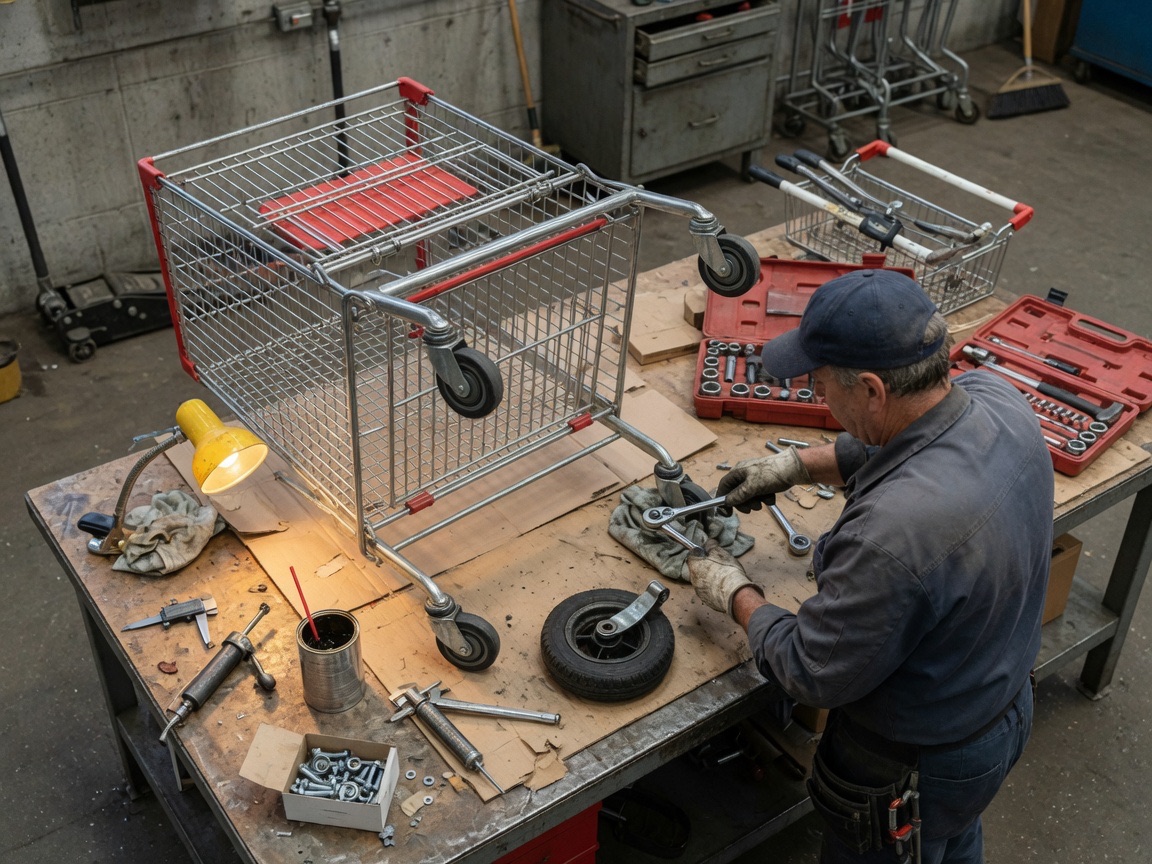
The problem
Walk any large retail store and you are looking at one of its most heavily worked assets: the cart fleet. Each cart is pushed loaded across concrete, rattled over expansion joints and car-park ramps, left in the rain, slammed into corrals, and nested against a hundred others — every operating day, year after year. No other piece of customer-facing equipment in the building takes comparable abuse.
Yet in most retail operations, carts are managed as a purchase, not as an asset. They are bought in a batch when the store opens, repaired ad hoc when someone complains, and replaced in a panic when the fleet visibly collapses — wobbling wheels, bent frames, carts abandoned mid-aisle by customers who gave up on them. The operating model is run-to-failure, and run-to-failure is the most expensive way to own anything that moves.
Why it matters
A failing cart does not present itself as a maintenance line item. It presents as three other costs that are easy to misattribute:
A cart left to run to failure charges three bills — and none of them arrives labelled "deferred maintenance":
Labor
A dragging caster takes measurably more force to push and steer. Across every retrieval, every shift, a degraded fleet quietly becomes a staffing cost — and customers feel the friction on every minute of the trip.
Safety
A seized wheel makes a loaded cart unpredictable on a ramp; a cracked frame or failed child-seat fitting is an incident waiting for a date. It is never logged as "deferred cart maintenance" — but that is usually what it was.
Floors & fixtures
A flat-spotted or seized caster stops rolling and starts scraping. Floor repair from dragged carts routinely costs more than replacing the casters on schedule would have.
The pattern is the same one we see in laundry equipment and lubrication programs: the failure is rarely sudden. It results from deferred maintenance, billed to a different department.
How PEO approaches it
PEO Tech manages cart fleets the way an engineer manages any rotating asset: with a duty cycle, a condition standard, and a plan. The model follows our standard four-step approach:
Assess. Establish what the fleet actually is — count by store, condition-grade each cart, identify failure patterns. Carts fail by environment: ramp-heavy sites kill casters, coastal sites corrode frames, basement car parks chew wheels with grit. The assessment tells you which failure mode you are actually buying maintenance against.
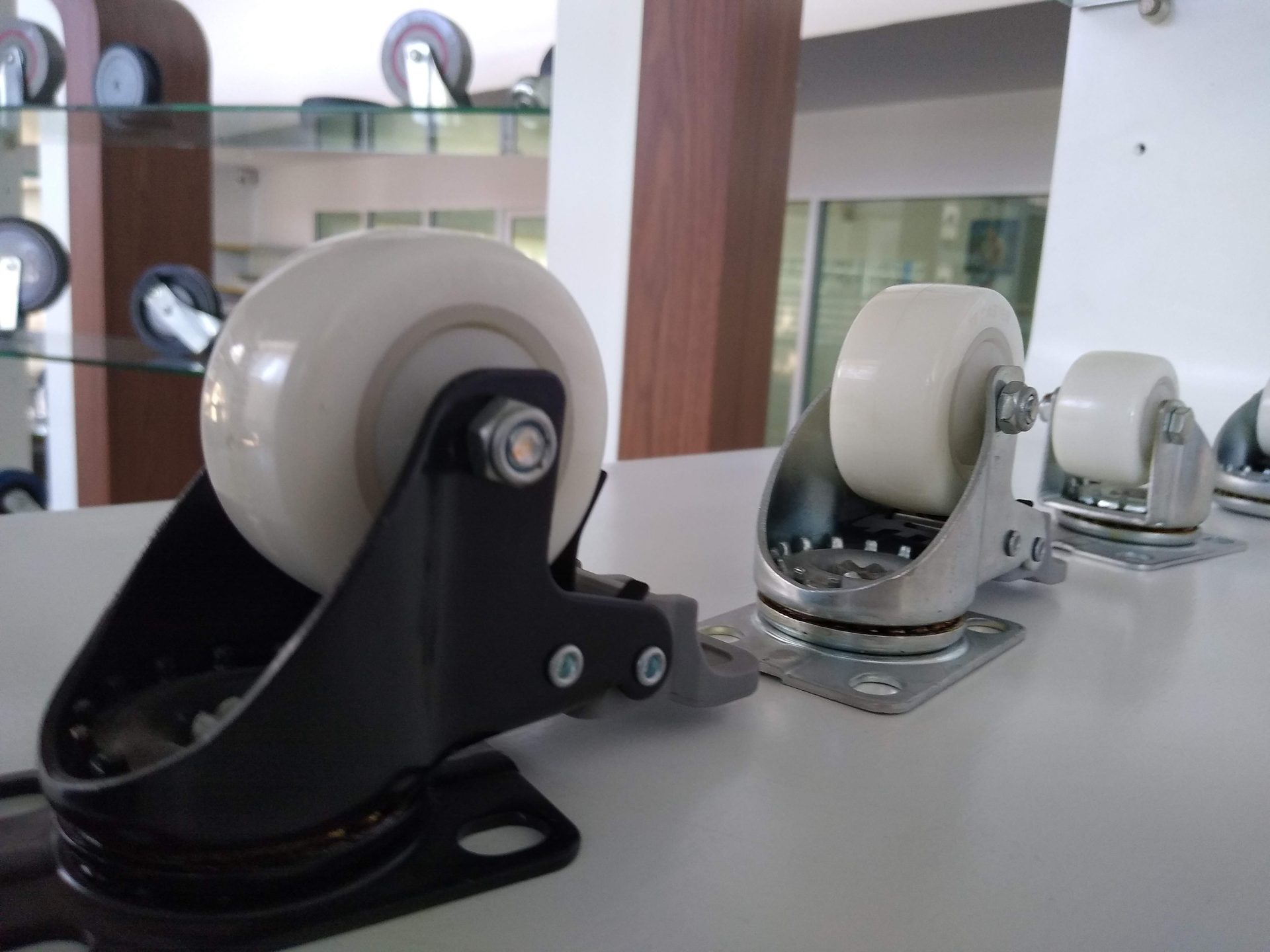
Specify. Match the equipment to the duty: caster grade and wheel material chosen for the floor surface, load, and route — not whatever was cheapest at procurement. A cart system specified as a whole wears more evenly and lasts longer.
Service. Preventive maintenance on a route schedule: casters replaced on condition, frames straightened, hardware tightened, on site, without taking the fleet out of service. Restore before replacing — a cart frame has years of life beyond its first set of wheels.
Replace. Retire carts on condition and duty cycle, in planned batches sized to budget cycles — not in a crisis purchase when the fleet fails all at once. Planned replacement converts an unpredictable capital shock into a flat, forecastable line.
Increasingly we structure this as a service-based replacement and maintenance model: the operator pays for a fleet that works, and accountability for uptime sits with the people doing the maintenance. Fleet condition data — counts, grades, failure history per site — does the planning work that guesswork used to do.
One practical point that surprises most operators: the economics of cart maintenance are decided in the car park, not the sales floor. Interior aisles are flat, smooth, and dry; they consume almost nothing. The retrieval loop — kerbs, ramps, expansion joints, standing water, the corral a trolley gets slammed into — is where wheels flat-spot, bearings take grit, and frames rack out of square. Two stores with identical fleets and identical traffic can have completely different maintenance costs because one has a basement car park and the other has a flat lot. This is why we assess routes and environments site by site rather than pricing maintenance per cart: the cart is the same everywhere; the duty cycle is not.

A practical checklist
Questions worth asking about your own fleet, whether or not you ever talk to us:
- Fleet register: Do you know how many carts each site actually has — counted this year, not at opening — and what condition they are in?
- Age profile: Can you say what fraction of the fleet is past its sensible duty life? If every cart is the same age, your replacement bill is one event, not a program.
- Failure attribution: When floors are repaired or a cart incident is logged, does anyone trace it back to cart condition — or does the cost disappear into facilities?
- Caster standard: Is there a defined caster specification per site (wheel material, bearing type, load rating) matched to the actual floor and route — or is replacement whatever the storeroom has?
- Maintenance cadence: Is there a scheduled service interval, or does maintenance start when a complaint reaches the manager?
- Retrieval route audit: Have you walked the worst route a cart takes — furthest corral, steepest ramp, roughest surface? That route sets the duty cycle, not the sales floor.
- Replacement plan: Is cart replacement a budgeted annual batch based on condition data, or a capital surprise every several years?
Related reading and services
Request a cart fleet assessment
We will count and condition-grade your carts, review the routes they run, and compare the cost of planned maintenance and replacement against run-to-failure.
Request a site assessment